





Every doll in the shop is a file, not a parcel. Here is what happens between the moment you pay and the moment a paper doll stands on your table.
What arrives
Three files, straight after payment: a print-ready PDF sized for US Letter, the same sheet sized for A4, and a transparent PNG you can scale to any size you like. The download link reaches your inbox in minutes and stays in your account with no limit and no expiry date.
What you print on
Ordinary paper works. Paper between 160 and 200 gsm holds a joint best, because a thin sheet tears at the hole and a very thick one will not turn. Print at 100 percent. The one setting that ruins a doll is "fit to page": it shrinks the sheet and the joints stop lining up.

What you cut with
Nail scissors are enough. No knife, no cutting mat, no special table.

What holds it together
A brad through each marked hole. Pierce the hole with a needle, an awl, or the tip of a compass, push the brad through, and open the legs behind the piece. Do not tighten it fully: the joint has to turn. No brads at home? A thread with a loose knot does the same job.


What you end up with
Seventeen centimetres of paper that folds at the elbow, sits, waves and holds the pose you leave it in. People use them as cards, as cake toppers, as a figure in a plant pot, as a page in a junk journal. Some just stand them on a shelf.
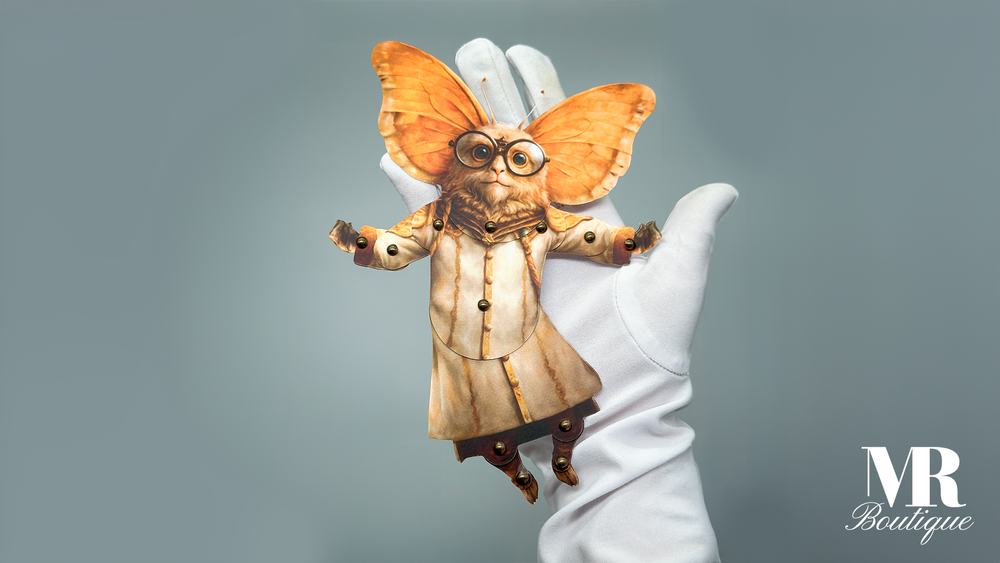
Print it again whenever you want. The file is yours and it does not run out.
The Meggie Retrow team
Write to us

Ready to print your first doll?
182 characters, one of them free. Print at home, cut, join with a brad - and it moves.