
- History, Paper Doll, What Are Paper Dolls?
- Oksana Pohrebniak
The evolution of paper dolls
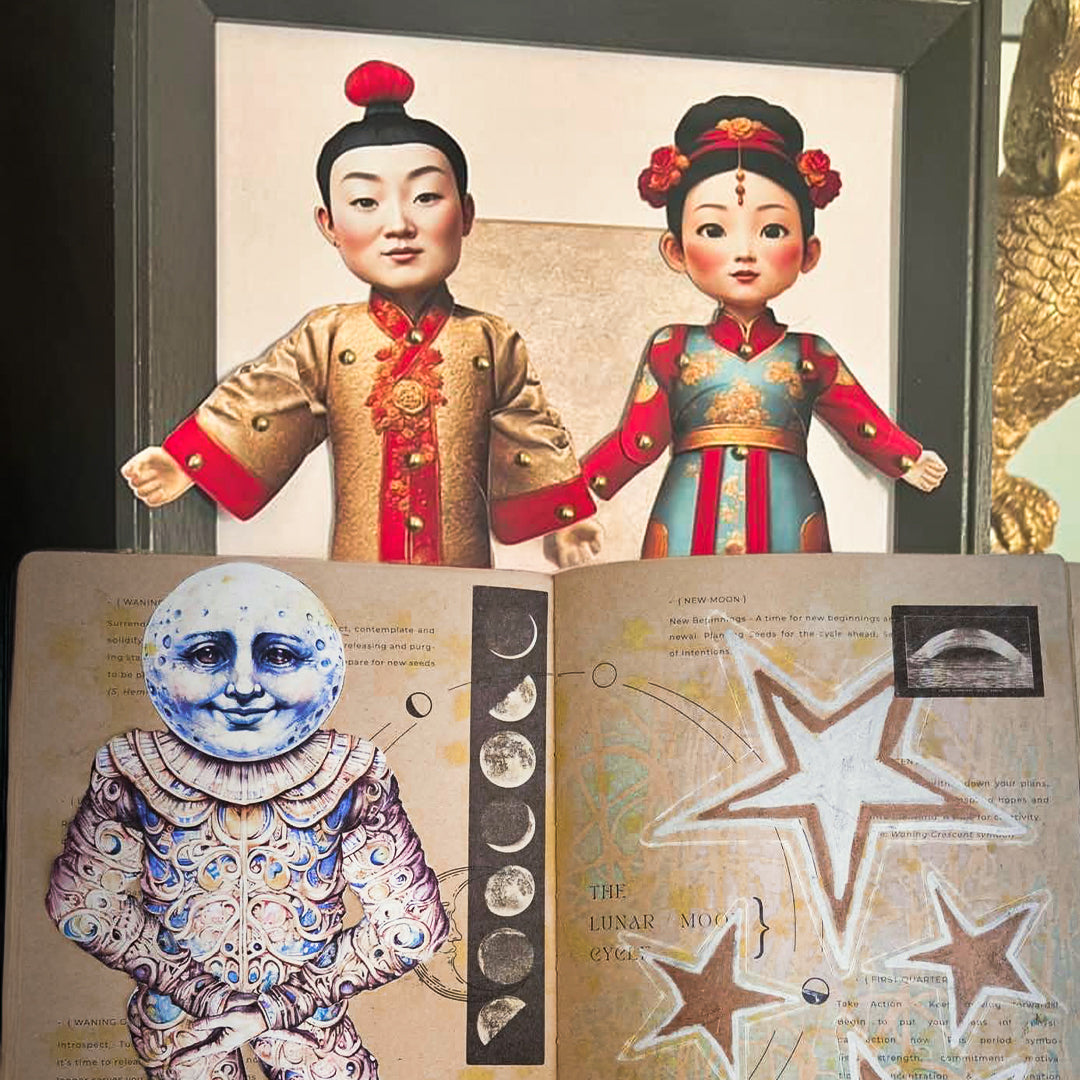
Paper dolls are older than the paper most of us print on. They have been ritual objects, aristocratic toys, wartime distractions and political cartoons, and they are still here.
Ancient beginnings
Flat jointed figures turn up in several ancient cultures. Egyptian ceremonies used figures cut from papyrus and other flat materials, standing in for deities and mythical beings. The idea of a body that can be laid out flat, cut, and moved is that old.

Royal patronage
In the nineteenth century paper dolls became a fashionable toy among wealthy families, helped along by Queen Victoria, who kept a large collection. The dolls of that period mirrored court dress, which is why so many surviving Victorian sets look like a catalogue of somebody else's wardrobe.

Wartime paper
During the Second World War paper was rationed and toys were scarce, so paper dolls did a lot of work. Published sets put dolls in military uniforms, partly as patriotism and partly because a sheet of paper was one of the few things a child could still be given.

Paper as commentary
By the middle of the twentieth century the form had a satirical streak. Sets featuring politicians and public figures made their point through costume changes, which is a cheap and very effective way to run a cartoon across several pages.
And now
Today a paper doll is usually a file. People print them for cards, cake toppers, junk journals, shadow theatre, and for the plain pleasure of cutting something out at a kitchen table. The tools have changed. The scissors have not.
The Meggie Retrow team
Write to us